Forklift Training & Certification in Houston, Texas
Forklifts around the Houston Ship Channel work container freight, steel and project cargo, and plant warehouses in summer heat. BHG trains and evaluates your operators at your facility, on the trucks they drive every shift.
- OSHA Classes 1–7
- Training at Your Facility
- Hands-On Evaluations
- Certification Records
Forklift Operator Training in Houston
Port Houston owns and operates eight public facilities along the 52-mile Houston Ship Channel, including the Barbours Cut and Bayport container terminals and the breakbulk docks around the Turning Basin. Around them are warehouses, laydown yards and plant shipping docks where forklift operators load and unload containers and trailers, stage steel and move palletized product. That work mixes indoor and outdoor driving, so many Houston operators switch between electric trucks inside and pneumatic-tire trucks out on the yard.
OSHA's powered industrial truck standard, 29 CFR 1910.178(l), requires three things before an operator works on their own: formal instruction, hands-on practice, and an evaluation of that operator's performance in the actual workplace. For a Ship Channel employer, the workplace part matters. An evaluation should include your dock boards, your trailer restraint or chocking routine, your yard traffic, and the loads your people actually handle, such as coiled steel or long pipe that shifts a truck's load center.
BHG Forklift Training is a service of BHG Safety Partners LLC, a Disabled Veteran-Owned company based in Hannibal, Missouri. We travel from Hannibal to your Houston-area facility and train on your own trucks, across all seven OSHA truck classes. We handle the formal instruction, the practical training and the workplace evaluation. Your company then certifies each operator, as the standard requires.
Where Forklifts Work in Houston
Barbours Cut and Bayport container terminals
Port Houston reports 300 acres of container yard at Barbours Cut, which opened at Morgan's Point in 1977, and 314 acres at Bayport in the Pasadena Industrial Complex. Warehouses that receive containers from these terminals need operators trained on dock plates, trailer creep and driving into container floors that can be weak or wet.
Turning Basin breakbulk and project cargo
Port Houston's multi-purpose facilities, including Turning Basin, Care, Jacintoport, Manchester and Sims Bayou terminals, handle cargo from grain and steel to heavy-lift project cargo and wind turbine blades, with large laydown areas next to the docks. Long, heavy or off-center loads on outdoor yards call for pneumatic-tire forklift and telehandler training focused on capacity plates, load centers and uneven ground.
Ship Channel petrochemical plants
The Greater Houston Partnership describes the world's largest petrochemical complex on the Houston Ship Channel. Where flammable gases or vapors may be present, OSHA 1910.178(c) limits which truck types (such as EX, EE or DY designations) may be used, so operators need to know which areas their truck is approved for.
Rail-served warehouses near the port
Port Houston lists more than 8,000 feet of working track at Barbours Cut connecting to off-site warehouses. Loading and unloading railcars adds rail-specific hazards to forklift work: bridge plates between dock and car, moving rail equipment, and blocking railcars before a truck drives in.
What Shapes Forklift Safety in Houston
Texas is not an OSHA-approved State Plan, so private employers in Houston fall under federal OSHA and its powered industrial truck standard, 29 CFR 1910.178.
NWS normals for Houston Intercontinental Airport (1991-2020) put the average high at 94.5 F in July and 94.9 F in August. Operators on open yards and in unconditioned trailers need water, rest and shade built into the shift, and heat should be part of the hazard discussion in training.
The Atlantic hurricane season runs June 1 to November 30, according to NOAA's National Hurricane Center. Storm prep often means moving and stacking stock quickly, and flooded yards or debris change travel paths, so re-brief operators before they drive after a storm.
Port Houston calls Houston the national leader for breakbulk cargo, helped by large laydown areas beside its general cargo and heavy-lift docks. Oversized loads are common here, which makes truck capacity plates and attachment ratings a practical training topic, not a formality.
Forklift Classes Houston Employers Need Most
All forklift classes- Class V: Outdoor Pneumatic Tire Forklift TrainingCertification for outdoor forklifts with pneumatic tires and engines.
- Class I: Electric Rider Forklift TrainingDesigned for electric rider forklifts used in warehouses and distribution centers.
- Class IV: Indoor Cushion Tire Forklift TrainingTraining for indoor engine powered forklifts with cushion tires.
- Class VII: Rough Terrain Forklift TrainingCertification for rough terrain forklifts used on construction sites.
Houston Forklift Training Questions
We get a lot of the same great questions from new clients. Here are the answers to the ones we hear most often — if yours isn't listed, don't hesitate to reach out directly.
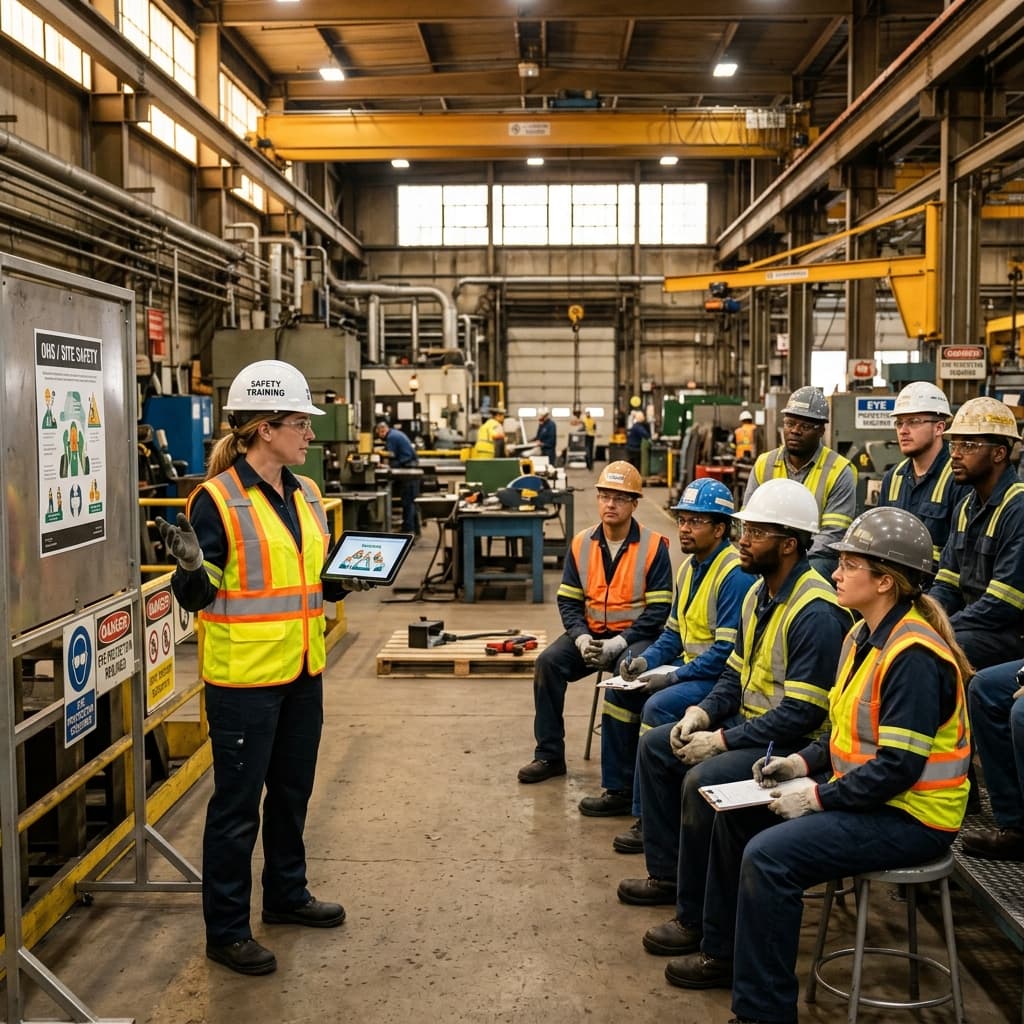
Onsite Forklift Training Session
Your Safety. Our Mission.
BHG Forklift Training trains and evaluates forklift operators at your facility, on your own trucks. Our instructors bring decades of hands-on experience in warehouses, distribution centers, manufacturing plants and construction sites.
Our approach is simple: we listen first. Every facility has its own trucks, layout and traffic patterns. We build each session around your equipment, your aisles and docks, and your shifts — so your operators train for the work they actually do.
From Class 1 electric riders in the warehouse to Class 7 rough terrain forklifts on the job site, we cover every OSHA truck class, from our base in Hannibal, Missouri to employers across 17 states in the Midwest and South, in English or Spanish.
Get in Contact with us Here!
Fill out the form below and we'll be in touch within one business day.