Forklift Training & Certification in St. Louis, Missouri
Forklift operator training and evaluations for St. Louis river terminals, plants and warehouses, done at your facility on your own trucks, by a training provider based upriver in Hannibal.
- OSHA Classes 1–7
- Training at Your Facility
- Hands-On Evaluations
- Certification Records
Forklift Operator Training in St. Louis
In St. Louis, a lot of forklift work happens on the Mississippi riverfront. The City of St. Louis describes the Port of Metropolitan St. Louis as the second-largest inland port system in the country: a 70-mile corridor covering both banks, with 15 barge-transfer facilities along its 15-mile core. The St. Louis Regional Freightway counts 46 docks and terminals along the city's 19 miles of riverfront, handling grain, feed, salt, fertilizer, chemicals, coal, steel and petroleum products.
Away from the river, the Freightway lists beverages, pharmaceuticals, chemicals, detergents, aerospace, metals and petroleum products as the region's industrial concentrations, and reports 185 million square feet of industrial space as of late 2025. That puts electric counterbalance trucks and pallet jacks in packaging halls and warehouses, propane trucks in plants, and pneumatic-tire forklifts on terminal yards and in steel and scrap handling.
BHG Forklift Training is based in Hannibal, Missouri, and travels to your St. Louis-area facility. We deliver the three parts OSHA's forklift standard, 29 CFR 1910.178(l), requires: formal instruction, practical hands-on training, and an evaluation of each operator's performance in your workplace, on your own trucks. BHG covers all seven OSHA truck classes, so a terminal with yard trucks outside and a warehouse inside can be handled in one visit. Your company then certifies its operators.
Where Forklifts Work in St. Louis
Mississippi River barge terminals
The City of St. Louis says the port's 15 barge-transfer facilities can handle 150 barges a day at full capacity, and it is the northernmost ice- and lock-free port on the Mississippi. Forklifts on these docks work near dock edges above the water and on uneven, wet surfaces, so travel paths, load visibility and pneumatic-tire truck handling come first in training.
St. Louis Municipal River Terminal
The city-owned terminal is a 40-acre public dock with a 2,000-foot dock, a 90,000-square-foot warehouse and rail access, handling cargo from scrap metal and coils to fertilizer and project cargo. Moving coils, bundles and bagged goods between barge, rail and warehouse takes operators who can judge heavy, off-center loads and share the yard with rail and crane work.
Beverage, chemical and consumer-products plants
The Freightway names Anheuser-Busch InBev, Procter & Gamble, Dial-Henkel and Reckitt-Benckiser among companies with production or large warehouse space in the region. High-volume packaging and shipping means fast pallet movement near pedestrians, and chemical plants add rules for handling drums and totes safely.
Regional warehouses and distribution
The St. Louis Regional Freightway counted another 4.5 million square feet of industrial space under construction as of Q4 2025. New buildings bring high racking, busy dock doors and trailer loading, where dock-plate use and trailer creep are central to operator training.
What Shapes Forklift Safety in St. Louis
Missouri private employers are under federal OSHA and its powered industrial truck standard, 29 CFR 1910.178. OSHA assigns St. Louis, St. Charles, Jefferson and Franklin counties to the St. Louis Area Office. Metro East sites in Illinois go to the Fairview Heights Area Office, so a company with terminals or warehouses on both banks deals with two federal offices.
Heat is a real factor for outdoor forklift work. The National Weather Service's 2025 climate summary for St. Louis recorded 49 days with highs of 90 degrees or more. Operators on open terminal yards and in hot trailers need water, rest and attention to propane cylinder handling in the heat.
Winter still matters: the same 2025 summary counted 85 days with lows at or below freezing and 25.2 inches of snow, well above the 16.6-inch normal. Frost on dock plates and river-wet surfaces that freeze overnight make traction and ramp travel part of training for riverfront crews.
Forklift Classes St. Louis Employers Need Most
All forklift classes- Class I: Electric Rider Forklift TrainingDesigned for electric rider forklifts used in warehouses and distribution centers.
- Class III: Electric Pallet Jack & Walkie TrainingCertification for electric pallet jacks and walk behind lift equipment.
- Class IV: Indoor Cushion Tire Forklift TrainingTraining for indoor engine powered forklifts with cushion tires.
- Class V: Outdoor Pneumatic Tire Forklift TrainingCertification for outdoor forklifts with pneumatic tires and engines.
St. Louis Forklift Training Questions
We get a lot of the same great questions from new clients. Here are the answers to the ones we hear most often — if yours isn't listed, don't hesitate to reach out directly.
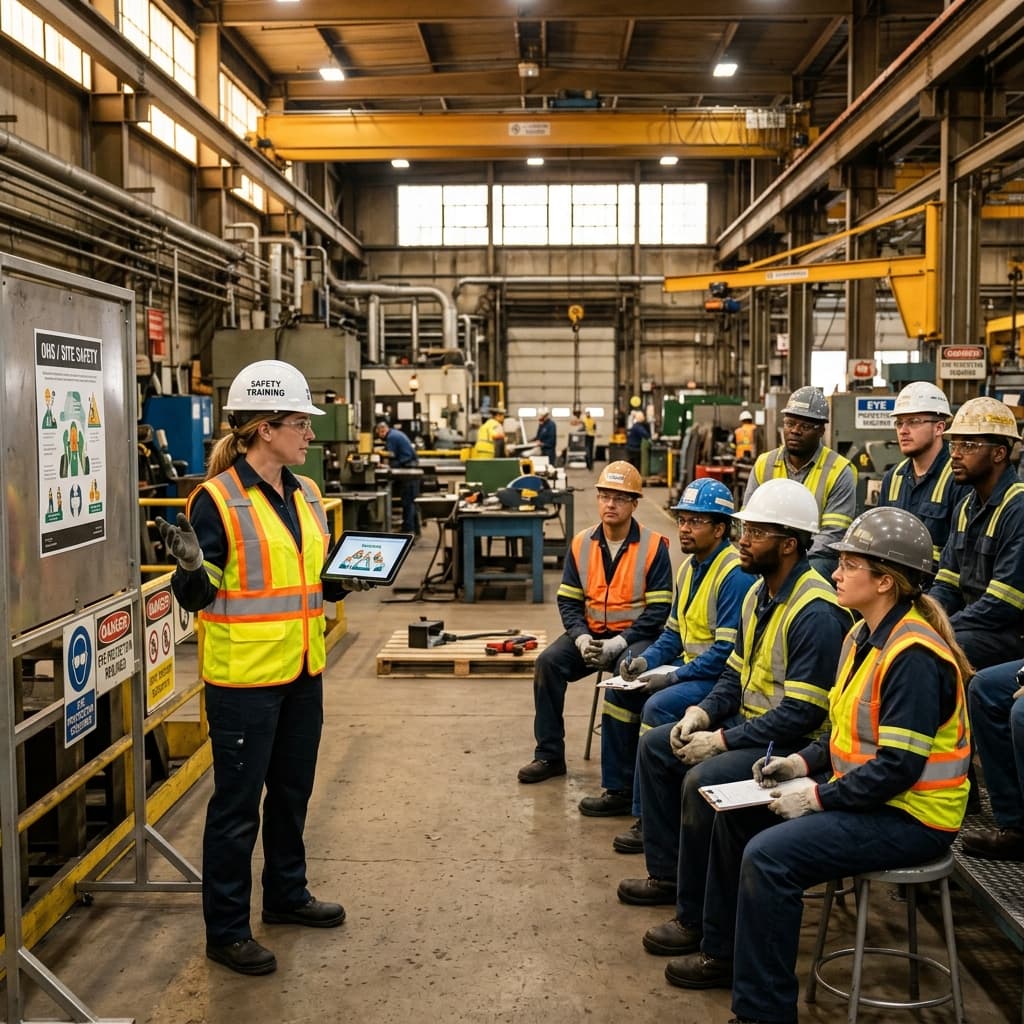
Onsite Forklift Training Session
Your Safety. Our Mission.
BHG Forklift Training trains and evaluates forklift operators at your facility, on your own trucks. Our instructors bring decades of hands-on experience in warehouses, distribution centers, manufacturing plants and construction sites.
Our approach is simple: we listen first. Every facility has its own trucks, layout and traffic patterns. We build each session around your equipment, your aisles and docks, and your shifts — so your operators train for the work they actually do.
From Class 1 electric riders in the warehouse to Class 7 rough terrain forklifts on the job site, we cover every OSHA truck class, from our base in Hannibal, Missouri to employers across 17 states in the Midwest and South, in English or Spanish.
Get in Contact with us Here!
Fill out the form below and we'll be in touch within one business day.