Forklift Training & Certification in Memphis, Tennessee
Memphis freight moves by air, river, rail and road, and nearly all of it crosses a dock on the forks of a truck. BHG Forklift Training comes to your Memphis facility and trains and evaluates your operators on the trucks they actually drive.
- OSHA Classes 1–7
- Training at Your Facility
- Hands-On Evaluations
- Certification Records
Forklift Operator Training in Memphis
Few cities put this many modes of freight in one place. The Memphis airport (MEM), home to FedEx's global hub, is one of the busiest cargo airports in North America and the world, Memphis is one of only four U.S. cities served by five Class I railroads, and the Port of Memphis runs 15 river miles along the Mississippi. Every one of those modes feeds warehouses and cross-docks where freight changes hands on forklifts, pallet jacks and reach trucks, often around the clock.
That mix means a single Memphis employer can need operators qualified on very different equipment. A cross-dock might run stand-up counterbalance trucks and electric pallet jacks inside, while a steel or cement terminal on President's Island runs large pneumatic-tire trucks outdoors next to the water. OSHA requires each operator to be trained and evaluated on the type of truck they use and the conditions of their own workplace, so a generic card from somewhere else is not enough.
BHG Forklift Training is a service of BHG Safety Partners LLC, a Disabled Veteran-Owned company based in Hannibal, Missouri. We travel from Hannibal to your facility and cover the three parts 29 CFR 1910.178(l) requires: formal instruction, practical hands-on training, and an evaluation of each operator's performance in your workplace, on your own trucks. Your company then certifies its operators.
Where Forklifts Work in Memphis
Air cargo at the Memphis airport (MEM)
FedEx has more than 34 million square feet of space under lease on airport property and operates almost 400 flights a day from its Memphis hub, and the airport's Cargo East facility includes cold storage and hazardous materials handling. Forklift operators in and around these buildings share space with tugs, loaders and foot traffic, so pedestrian right-of-way, load stability and hazmat handling belong in their training.
Port of Memphis and President's Island
The port has 68 waterfront facilities, 37 of them terminals handling petroleum, cement, steel, fertilizers and grains, and President's Island hosts 95% of the industries within the port's jurisdiction. Steel coils, bagged cement and fertilizer on outdoor yards and dock aprons call for pneumatic-tire trucks, capacity plate discipline and extra care near water edges and rail spurs.
Rail-served warehouses and transload
With five Class I railroads serving the city, rail-served buildings here may load boxcars at one dock and trailers at the next. Dockboards, railcar movement, wheel chocks and trailer creep at the dock face are the hazards that separate these buildings from a truck-only warehouse.
Distribution centers across Shelby County
Warehouses that serve the airport, river and rail freight commonly run high racking, narrow aisles and heavy pallet-jack traffic. Reach trucks and order pickers need operators trained on load height, rack contact and working at elevation, not just on a sit-down counterbalance truck.
What Shapes Forklift Safety in Memphis
TOSHA has adopted the federal general industry standards in 29 CFR 1910, which include the powered industrial truck rule at 1910.178, so the training and evaluation requirements for Memphis operators match the federal ones. Tennessee does keep a few state-specific standards, including its own hazard communication rule, which matters for operators moving chemicals, fertilizers or fuels.
The Tennessee State Plan excludes maritime employment, including marine terminals and longshoring. Forklift work at a river terminal on the Port of Memphis can therefore fall under federal OSHA and the marine terminal standard, which has its own powered industrial truck section at 29 CFR 1917.43. If you run a terminal, confirm which rules apply before you set up training.
The metro crosses three states. Arkansas and Mississippi do not have OSHA State Plans, so warehouses in West Memphis, Southaven or Olive Branch answer to federal OSHA, while buildings in Shelby County answer to TOSHA. The forklift training requirements are the same, but the enforcing agency differs.
NWS Memphis lists a normal July high of 91.9 degrees and, for 1991 to 2020, an average of 72.1 days a year at or above 90 degrees. Operators on outdoor yards, dock aprons and in trailers need water, rest and acclimatization planned into long shifts.
Forklift Classes Memphis Employers Need Most
All forklift classes- Class I: Electric Rider Forklift TrainingDesigned for electric rider forklifts used in warehouses and distribution centers.
- Class II: Narrow Aisle Forklift TrainingTraining for narrow aisle lift trucks used in tight warehouse layouts.
- Class III: Electric Pallet Jack & Walkie TrainingCertification for electric pallet jacks and walk behind lift equipment.
- Class V: Outdoor Pneumatic Tire Forklift TrainingCertification for outdoor forklifts with pneumatic tires and engines.
Memphis Forklift Training Questions
We get a lot of the same great questions from new clients. Here are the answers to the ones we hear most often — if yours isn't listed, don't hesitate to reach out directly.
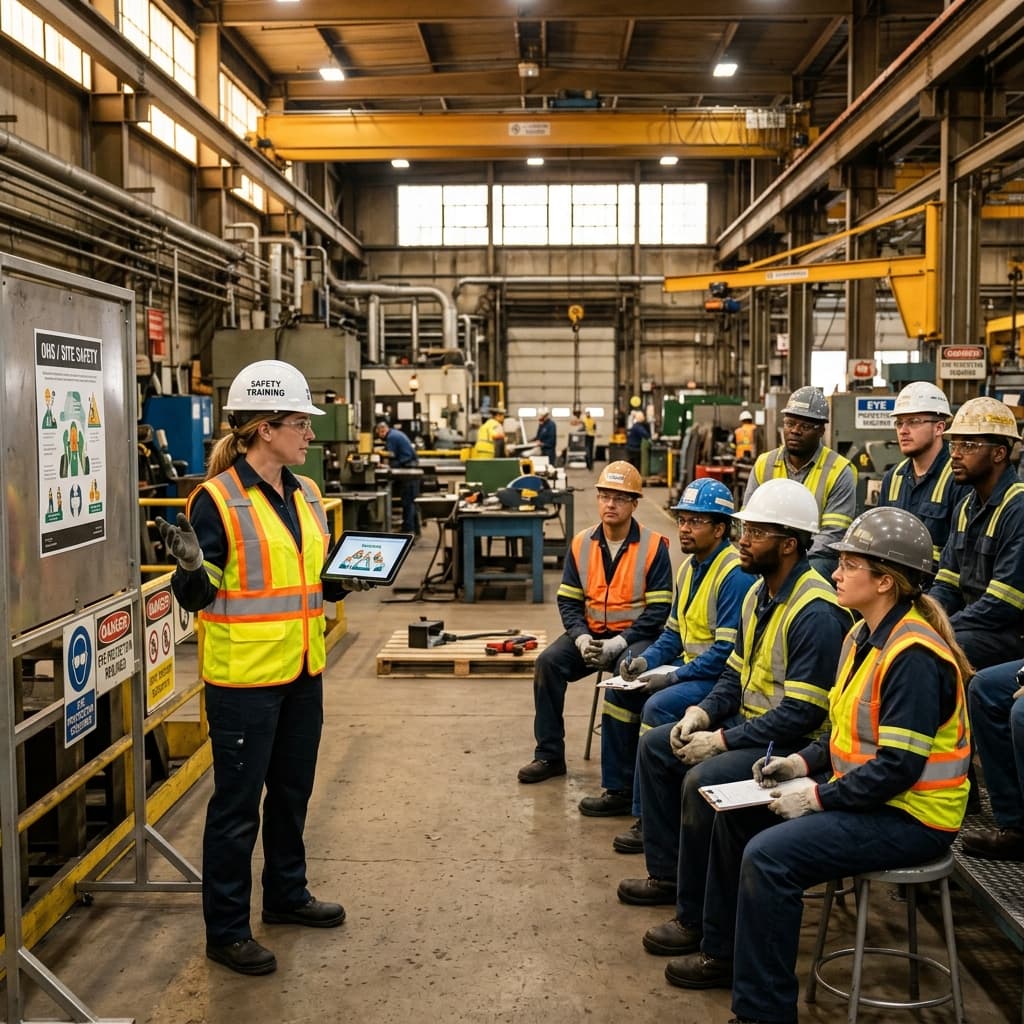
Onsite Forklift Training Session
Your Safety. Our Mission.
BHG Forklift Training trains and evaluates forklift operators at your facility, on your own trucks. Our instructors bring decades of hands-on experience in warehouses, distribution centers, manufacturing plants and construction sites.
Our approach is simple: we listen first. Every facility has its own trucks, layout and traffic patterns. We build each session around your equipment, your aisles and docks, and your shifts — so your operators train for the work they actually do.
From Class 1 electric riders in the warehouse to Class 7 rough terrain forklifts on the job site, we cover every OSHA truck class, from our base in Hannibal, Missouri to employers across 17 states in the Midwest and South, in English or Spanish.
Get in Contact with us Here!
Fill out the form below and we'll be in touch within one business day.