Forklift Training & Certification in Chicago, Illinois
Forklift operator training and evaluations for Chicago-area food plants, air cargo warehouses, intermodal distribution parks and Calumet River terminals, done at your facility on the trucks your crews drive.
- OSHA Classes 1–7
- Training at Your Facility
- Hands-On Evaluations
- Certification Records
Forklift Operator Training in Chicago
Chicago's forklift work follows its freight. CMAP reports that a quarter of all U.S. rail freight originates, terminates or passes through northeastern Illinois, and the region has 18 rail-truck intermodal terminals. The biggest cluster is CenterPoint Intermodal Center in Joliet and Elwood, built around BNSF Logistics Park Chicago and the Union Pacific Joliet Intermodal Terminal. At O'Hare, the Chicago Department of Aviation lists about two million square feet of airside cargo facilities and another two million landside, where freight is broken down and rebuilt on pallets.
Those operations put very different trucks in the same metro. Distribution buildings at the intermodal parks run electric counterbalance and reach trucks on smooth floors. Food plants, which give Chicagoland what World Business Chicago calls America's largest food manufacturing workforce, add pallet jacks and cold rooms. On the Southeast Side, Port of Chicago terminals move lumber and mineral aggregates on paved yards where pneumatic-tire forklifts work outdoors through a Lake Michigan winter.
BHG Forklift Training travels from Hannibal, Missouri, to your Chicago-area facility. We deliver the three parts OSHA's forklift standard, 29 CFR 1910.178(l), requires: formal instruction, practical hands-on training, and an evaluation of each operator's performance in your workplace, on your own trucks. That covers all seven OSHA truck classes, so a site that runs reach trucks inside and a propane or diesel yard truck outside can have both handled in one visit. Your company then certifies its operators.
Where Forklifts Work in Chicago
CenterPoint Intermodal Center, Joliet/Elwood
CenterPoint describes this roughly 6,400-acre development as North America's largest master-planned inland port, anchored by BNSF Logistics Park Chicago and the Union Pacific Joliet Intermodal Terminal. Warehouses there unload containers and trailers all day, so training centers on dock plates, trailer creep, wheel chocks and truck traffic in the yard.
O'Hare air cargo
The Chicago Department of Aviation says O'Hare handles over two million metric tonnes of cargo a year and ranks first in the Americas by freight value, with a new northeast cargo campus added to three south-airfield cargo ramps. Cargo warehouses build and break down pallets under time pressure, which brings mixed forklift and pedestrian traffic, unstable loads and tight turns at dock doors.
Food manufacturing and cold storage
World Business Chicago says the region has the nation's largest food manufacturing workforce, with meat processing and dairy among its high-growth segments. Forklifts and pallet jacks moving between freezers, coolers and docks deal with frost, condensation on floors and reduced traction.
Port of Chicago terminals on the Calumet River
The Illinois International Port District owns Iroquois Landing, with 3,000 linear feet of ship and barge berthing at the mouth of the Calumet River, and the roughly 1,600-acre Lake Calumet Terminal. Bulk lumber and aggregates are handled on open paved yards near berth edges, a job for pneumatic-tire forklifts and operators trained on uneven surfaces and wind.
What Shapes Forklift Safety in Chicago
Private employers in Chicago are under federal OSHA and its powered industrial truck standard, 29 CFR 1910.178. Illinois does run an OSHA-approved state plan (IL OSHA, in the Illinois Department of Labor), but OSHA's directory says it covers only public-sector employers such as state and local government, not private warehouses or plants.
Lake Michigan drives winter conditions at yards and docks. The Illinois State Climatologist notes that lake-effect snow boosts Chicago's snowfall when winds come from the north or northeast, and the National Weather Service's 1991-2020 normals for O'Hare are 38.4 inches of snow and about 121 days a year with lows at or below freezing. Outdoor forklift work needs attention to snow-covered dock plates, icy ramps and reduced visibility.
Food plants and cold storage keep freezer conditions year-round, so operators who move between cold rooms and warm docks deal with condensation on floors and forks, fogged glass on enclosed cabs and reduced traction.
Forklift Classes Chicago Employers Need Most
All forklift classes- Class I: Electric Rider Forklift TrainingDesigned for electric rider forklifts used in warehouses and distribution centers.
- Class II: Narrow Aisle Forklift TrainingTraining for narrow aisle lift trucks used in tight warehouse layouts.
- Class III: Electric Pallet Jack & Walkie TrainingCertification for electric pallet jacks and walk behind lift equipment.
- Class V: Outdoor Pneumatic Tire Forklift TrainingCertification for outdoor forklifts with pneumatic tires and engines.
Chicago Forklift Training Questions
We get a lot of the same great questions from new clients. Here are the answers to the ones we hear most often — if yours isn't listed, don't hesitate to reach out directly.
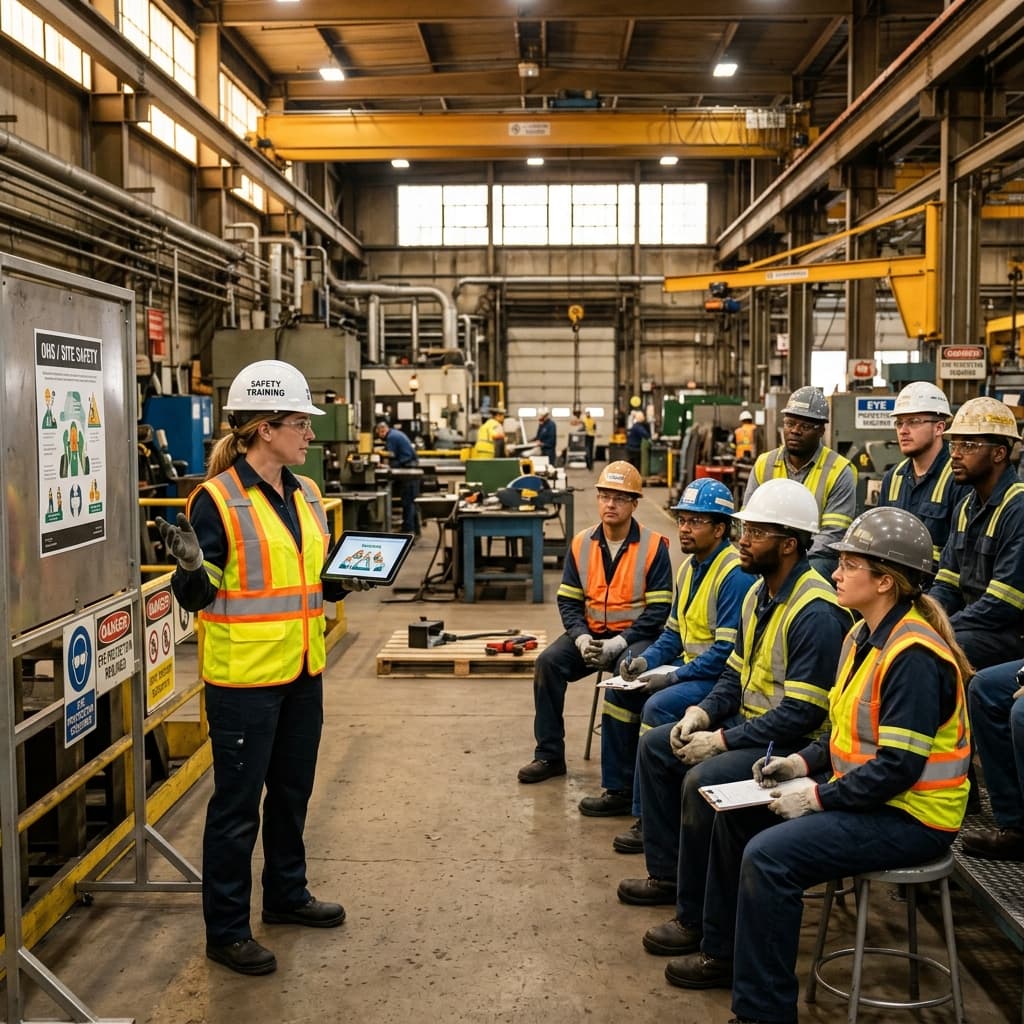
Onsite Forklift Training Session
Your Safety. Our Mission.
BHG Forklift Training trains and evaluates forklift operators at your facility, on your own trucks. Our instructors bring decades of hands-on experience in warehouses, distribution centers, manufacturing plants and construction sites.
Our approach is simple: we listen first. Every facility has its own trucks, layout and traffic patterns. We build each session around your equipment, your aisles and docks, and your shifts — so your operators train for the work they actually do.
From Class 1 electric riders in the warehouse to Class 7 rough terrain forklifts on the job site, we cover every OSHA truck class, from our base in Hannibal, Missouri to employers across 17 states in the Midwest and South, in English or Spanish.
Get in Contact with us Here!
Fill out the form below and we'll be in touch within one business day.