Forklift Training & Certification in El Paso, Texas
El Paso forklift work follows the trucks that cross from Ciudad Juarez every day, into warehouses, cross-docks and air cargo buildings. BHG trains and evaluates your operators at your facility, on your own trucks, in English or Spanish.
- OSHA Classes 1–7
- Training at Your Facility
- Hands-On Evaluations
- Certification Records
Forklift Operator Training in El Paso
El Paso is a border logistics city. The City of El Paso says the Ysleta-Zaragoza Port of Entry alone processes more than 1.3 million cargo trucks a year and handles about 80 percent of the trade that passes directly through El Paso's ports of entry. Border trade here is tied to the maquiladoras in Ciudad Juarez, which the Texas Comptroller describes as factories that receive raw materials from the U.S. duty-free and return finished goods. On the El Paso side, it moves through warehouses and cross-docks where forklift operators unload, sort and reload trailers quickly.
OSHA's powered industrial truck standard, 29 CFR 1910.178(l), requires formal instruction, practical hands-on training, and an evaluation of every operator's performance in the workplace. At a cross-border warehouse, the evaluation should happen on your own docks and yard: securing trailers, crossing dock plates, handling mixed loads of electronics or machinery, and working around drivers and dock staff on foot during peak crossing hours.
BHG Forklift Training is a service of BHG Safety Partners LLC, a Disabled Veteran-Owned company based in Hannibal, Missouri. We travel from Hannibal to your El Paso facility and train on the trucks your crews already run, covering all seven OSHA truck classes. Training is offered in English and Spanish. We deliver the formal instruction, the practical training and the workplace evaluation, and your company certifies each operator.
Where Forklifts Work in El Paso
Ysleta-Zaragoza Port of Entry corridor
The city-owned crossing handles about 60 percent of total regional international trade, with trade valued at over $83 billion a year, according to the City of El Paso. Warehouses and cross-docks that turn this freight need operators trained on trailer restraints, trailer creep and fast dock turns without cutting corners.
Bridge of the Americas commercial traffic
Commercial lanes at the Bridge of the Americas run 6 a.m. to 6 p.m. on weekdays and until 2 p.m. on Saturdays, and the City notes a planned commercial lane closure there in fall 2027. Crossing hours shape when trailers arrive, so docks see surges that test operators' discipline around pedestrians and yard traffic.
Maquiladora supply chain warehouses
The Texas Comptroller lists electronics, machinery, automobiles and furniture as top imports through El Paso, and notes that warehousing and logistics businesses depend on border trade. Mixed loads like these combine fragile, high-value cartons with heavy, off-center machinery, which makes load handling, stability and attachment use core training topics.
El Paso International Airport air cargo
The airport describes its 288,000-square-foot air cargo complex, made up of two 144,000-square-foot buildings served by DHL, FedEx and UPS, as the largest and most modern on the U.S.-Mexico border. Air freight floors mix forklifts, pallet jacks and tow tractors around time-definite shipments.
What Shapes Forklift Safety in El Paso
Texas has no OSHA-approved State Plan, so private employers in El Paso are covered by federal OSHA and its powered industrial truck standard, 29 CFR 1910.178. New Mexico is different: its State Plan covers most private employers there, so a company running buildings on both sides of the state line answers to two agencies.
NWS El Paso reports an average of 26 days a year at 100 F or above for 1991-2020, and a record 70 days in 2023, including 44 in a row from June 16 to July 29. Yard and dock operators need heat breaks, water and shade, and heat illness should be part of their training.
An NWS study of El Paso airport records found a 42% chance of blowing dust on any day in March, April and May, and an average of 14.5 significant dust events a year. Dust cuts visibility on outdoor yards and clogs air filters and radiators on engine-powered trucks, so pre-shift inspections and slower yard speeds belong in the plan for windy days.
Forklift Classes El Paso Employers Need Most
All forklift classes- Class I: Electric Rider Forklift TrainingDesigned for electric rider forklifts used in warehouses and distribution centers.
- Class III: Electric Pallet Jack & Walkie TrainingCertification for electric pallet jacks and walk behind lift equipment.
- Class V: Outdoor Pneumatic Tire Forklift TrainingCertification for outdoor forklifts with pneumatic tires and engines.
- Class VI: Tow Tractor & Pulling System TrainingTraining for tow tractors and powered pulling equipment systems.
El Paso Forklift Training Questions
We get a lot of the same great questions from new clients. Here are the answers to the ones we hear most often — if yours isn't listed, don't hesitate to reach out directly.
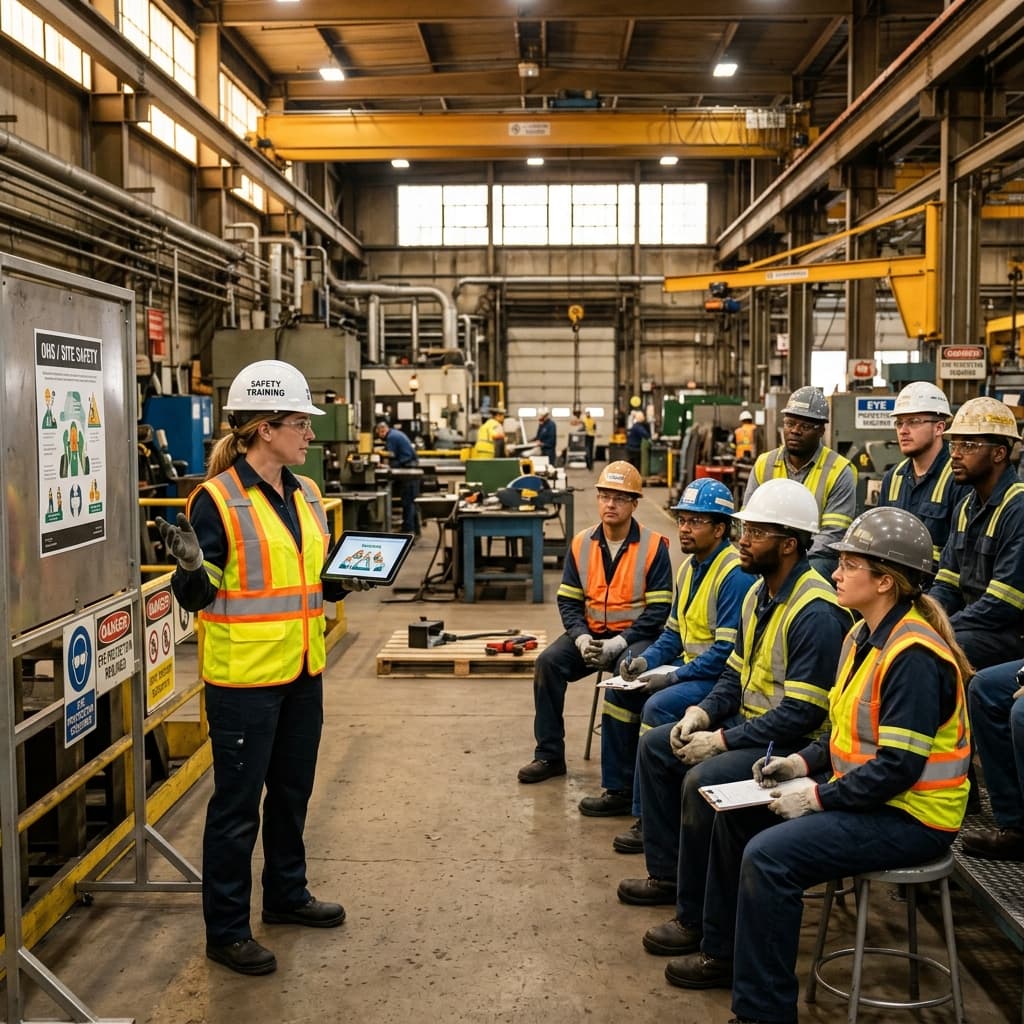
Onsite Forklift Training Session
Your Safety. Our Mission.
BHG Forklift Training trains and evaluates forklift operators at your facility, on your own trucks. Our instructors bring decades of hands-on experience in warehouses, distribution centers, manufacturing plants and construction sites.
Our approach is simple: we listen first. Every facility has its own trucks, layout and traffic patterns. We build each session around your equipment, your aisles and docks, and your shifts — so your operators train for the work they actually do.
From Class 1 electric riders in the warehouse to Class 7 rough terrain forklifts on the job site, we cover every OSHA truck class, from our base in Hannibal, Missouri to employers across 17 states in the Midwest and South, in English or Spanish.
Get in Contact with us Here!
Fill out the form below and we'll be in touch within one business day.