Forklift Training & Certification in Corpus Christi, Texas
In Corpus Christi, forklifts move pipe and wind turbine parts across open wharves, stage parts and supplies at refineries and chemical plants, and run cold docks at beef and grocery operations. BHG trains and evaluates your operators at your facility, on the trucks they already drive.
- OSHA Classes 1–7
- Training at Your Facility
- Hands-On Evaluations
- Certification Records
Forklift Operator Training in Corpus Christi
The Port of Corpus Christi calls itself the third-largest port in the United States by total waterborne tonnage. Its customers moved a record 110.3 million tons through the ship channel in the first half of 2026. Most of that tonnage is liquid cargo such as crude oil, LNG and refined products, but the port's general cargo docks still handle steel pipe, flat steel, super-sacks, wind components and project cargo. On the landside, refineries, plastics plants and a steel mill in neighboring San Patricio County keep warehouses, laydown yards and maintenance shops busy around the bay.
Each of those places has its own forklift hazards. On a wharf, the dangers are open edges, rail lines set into the apron, and long loads that block the operator's view. Inside a refinery fence, the question is whether a given truck is approved for the area at all. At a beef plant or grocery warehouse, operators deal with wet floors, freezer doors and constant turns at the dock. OSHA's rule expects training and evaluation to match the truck and the place it runs, and a generic course can't do that.
BHG Forklift Training is based in Hannibal, Missouri, and belongs to BHG Safety Partners LLC, a Disabled Veteran-Owned company. We come to your Corpus Christi site and work through the classroom material, hands-on practice and a performance evaluation on your equipment, your docks and your yard. Sessions can be run in English or Spanish. Your company keeps the certification decision, signing off each operator who completes the training and passes the evaluation.
Where Forklifts Work in Corpus Christi
Port of Corpus Christi general cargo docks
The port lists five multi-purpose cargo docks for wind turbine components, steel pipe, flat steel, containers, Ro/Ro, super-sacks and heavy lift cargo, with over 120 acres of open storage on the Northside and a 76-acre open storage yard on the Southside. Pneumatic-tire forklifts and telehandlers working these laydown yards handle long and heavy loads on open ground, next to crane lifts and dockside rail tracks.
Dock 9 rail canopy and Dock 15 bagging lines
At Dock 9, a 48-foot-wide canopy covers double rail tracks behind the warehouse for transfers of weather-sensitive cargo, and two high-speed bagging lines sit near Dock 15. Moving bags and super-sacks between railcars, warehouses and trucks means working on dock boards and next to rail cars, and loads can tear or slide off the forks.
Refineries and petrochemical plants
The Corpus Christi Regional Economic Development Corporation lists Valero, Flint Hills, CITGO, Celanese, Chemours, LyondellBasell and Gulf Coast Growth Ventures among Coastal Bend chemical and petrochemical employers. Warehouses and turnaround staging areas at these sites put forklifts near flammable liquids and gases, where the truck's designation has to match the area classification.
Steel and plastics plants in San Patricio County
CCREDC reports that Steel Dynamics opened a 1.2 million-square-foot steel plant in Sinton in spring 2022, and that the SABIC and ExxonMobil joint venture Gulf Coast Growth Ventures opened a 1,300-acre plastics plant in Gregory the same year. Steel coil and bagged resin both call for heavy-capacity trucks, the right attachments and careful stacking.
Food processing and grocery distribution
CCREDC's major employer list includes HEB Stores & Bakery with 3,847 employees and STX Beef Processors with 750. Operators in beef processing and grocery warehouses cross wet floors and pass in and out of cold rooms, and on busy docks they share space with people on foot.
What Shapes Forklift Safety in Corpus Christi
Texas does not run an OSHA-approved State Plan, so federal OSHA enforces 29 CFR 1910.178 at private Corpus Christi employers. On the port's docks, marine terminal work falls under 29 CFR Part 1917, and 1917.1 makes the general industry training rule, 1910.178(l), apply there too. A stevedore, a terminal and a warehouse all end up with the same training and evaluation duty.
29 CFR 1910.178(c) ties truck designations to hazardous location classes. In a refinery warehouse, a tank farm or a chemical plant's drum storage area, a standard gasoline, LP-gas or electric truck may not be allowed. Operators should know how to read their truck's designation and the area markings, and whether the truck can go in at all.
NOAA's 1991-2020 normals for Corpus Christi show 122.9 days a year at 90 degrees or hotter. On open wharves and laydown yards, heat and Gulf humidity add up, so operators need water, shade, rest breaks and time to acclimate.
NWS Corpus Christi notes that Hurricane Harvey in August 2017 was the first Category 4 hurricane to make landfall on the Middle Texas Coast since Celia in 1970. Storm preparation at a warehouse or yard means securing or moving stacked loads, parking and charging trucks away from flood-prone areas, and inspecting every truck before it goes back into service.
Forklift Classes Corpus Christi Employers Need Most
All forklift classes- Class I: Electric Rider Forklift TrainingDesigned for electric rider forklifts used in warehouses and distribution centers.
- Class III: Electric Pallet Jack & Walkie TrainingCertification for electric pallet jacks and walk behind lift equipment.
- Class V: Outdoor Pneumatic Tire Forklift TrainingCertification for outdoor forklifts with pneumatic tires and engines.
- Class VII: Rough Terrain Forklift TrainingCertification for rough terrain forklifts used on construction sites.
Corpus Christi Forklift Training Questions
We get a lot of the same great questions from new clients. Here are the answers to the ones we hear most often — if yours isn't listed, don't hesitate to reach out directly.
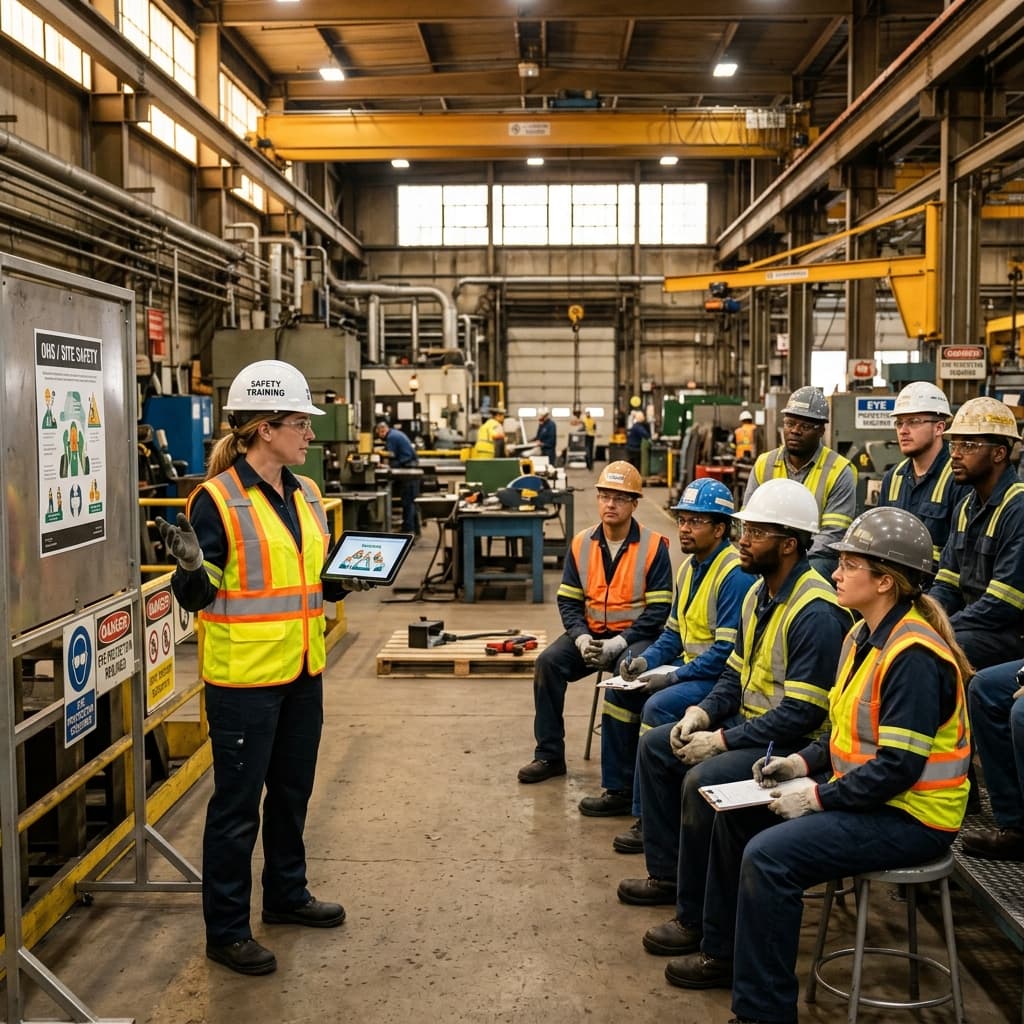
Onsite Forklift Training Session
Your Safety. Our Mission.
BHG Forklift Training trains and evaluates forklift operators at your facility, on your own trucks. Our instructors bring decades of hands-on experience in warehouses, distribution centers, manufacturing plants and construction sites.
Our approach is simple: we listen first. Every facility has its own trucks, layout and traffic patterns. We build each session around your equipment, your aisles and docks, and your shifts — so your operators train for the work they actually do.
From Class 1 electric riders in the warehouse to Class 7 rough terrain forklifts on the job site, we cover every OSHA truck class, from our base in Hannibal, Missouri to employers across 17 states in the Midwest and South, in English or Spanish.
Get in Contact with us Here!
Fill out the form below and we'll be in touch within one business day.