Forklift Training & Certification in Oklahoma City, Oklahoma
Forklift training and operator evaluations for the distribution centers, aerospace shops and warehouses where I-35, I-40 and I-44 meet, taught at your facility on the trucks your crews drive.
- OSHA Classes 1–7
- Training at Your Facility
- Hands-On Evaluations
- Certification Records
Forklift Operator Training in Oklahoma City
Oklahoma City sits at the junction of I-35, I-40 and I-44, and that crossroads has pulled in some very large warehouses. Hobby Lobby ships to all of its 900-plus stores from a 10-million-square-foot distribution center in the city, and Amazon has built more than 3.5 million square feet of distribution space in the region. Buildings that size run shifts of reach trucks, order pickers, pallet jacks and sit-down counterbalance trucks, often in the same aisles as people on foot.
The metro's other big material-handling base is aerospace. The Greater Oklahoma City Economic Development office counts 78 maintenance, repair and overhaul companies in the region, and Tinker Air Force Base, home of the Oklahoma City Air Logistics Center, is the largest single-site employer in the state. Supplier shops move engine stands, crated parts and tooling with forklifts and tow tractors, often with top-heavy or off-center loads and people working close by.
BHG Forklift Training travels from Hannibal, Missouri to your Oklahoma City facility. We train and evaluate operators on your own trucks, in your own aisles and docks, covering the formal instruction, hands-on practice and workplace evaluation that 29 CFR 1910.178(l) requires, so you can certify each operator with confidence. The practical sessions run in your racking, at your docks and around your own pedestrian routes rather than in a classroom lot.
Where Forklifts Work in Oklahoma City
Hobby Lobby and big-box distribution
Hobby Lobby's 10-million-square-foot Oklahoma City distribution center serves 900-plus stores, and Amazon runs more than 3.5 million square feet of regional distribution space. High-bay racking, order picking at height and constant pedestrian crossings make narrow-aisle and pallet jack evaluations a priority.
McKesson's new pharmaceutical hub in Moore
McKesson is building a 330,000-square-foot automated regional distribution center in the North Moore Industrial Park, with expanded cold chain capacity and full operations planned for 2029. Cold rooms bring condensation on floors and dock plates, and operators need to know how their trucks behave around automated conveyors and restricted zones.
Aerospace MRO and suppliers
The region's 78 MRO companies employ more than 4,700 workers, and firms such as Boeing, Pratt & Whitney and AAR operate here. Moving engines, landing gear and crated parts calls for careful load-center judgment, tow tractor training, and slow travel through shared hangar and shop floors.
Foreign Trade Zone 106 at OKC Will Rogers International Airport
FTZ 106 sits next to the airport, where the Chamber counts 70 companies employing nearly 12,000 people on site. Mixed freight, trailers dropped at docks and outdoor staging lots mean both indoor electric trucks and pneumatic-tire trucks on yards.
What Shapes Forklift Safety in Oklahoma City
The National Weather Service office in Norman records thirteen violent tornadoes (eleven F4/EF4 and two F5/EF5) in the immediate Oklahoma City area, the most recent on May 20, 2013. Operators in large warehouses should know where to park and shut down a truck when a warning sounds, so aisles to shelter stay clear.
The December 2007 ice storm left over an inch of ice across much of Oklahoma, hitting the corridor from Lawton through Oklahoma City to Tulsa, and more than 641,000 electric customers lost power at its peak. Iced dock plates, trailer beds and yard surfaces change stopping distances for any truck that crosses them.
Oklahoma private employers fall under federal OSHA, so the federal powered industrial truck standard, 29 CFR 1910.178, applies directly, including refresher training after an accident, a near miss or an observed unsafe practice, and a performance evaluation at least every three years.
Forklift Classes Oklahoma City Employers Need Most
All forklift classes- Class I: Electric Rider Forklift TrainingDesigned for electric rider forklifts used in warehouses and distribution centers.
- Class II: Narrow Aisle Forklift TrainingTraining for narrow aisle lift trucks used in tight warehouse layouts.
- Class III: Electric Pallet Jack & Walkie TrainingCertification for electric pallet jacks and walk behind lift equipment.
- Class VI: Tow Tractor & Pulling System TrainingTraining for tow tractors and powered pulling equipment systems.
Oklahoma City Forklift Training Questions
We get a lot of the same great questions from new clients. Here are the answers to the ones we hear most often — if yours isn't listed, don't hesitate to reach out directly.
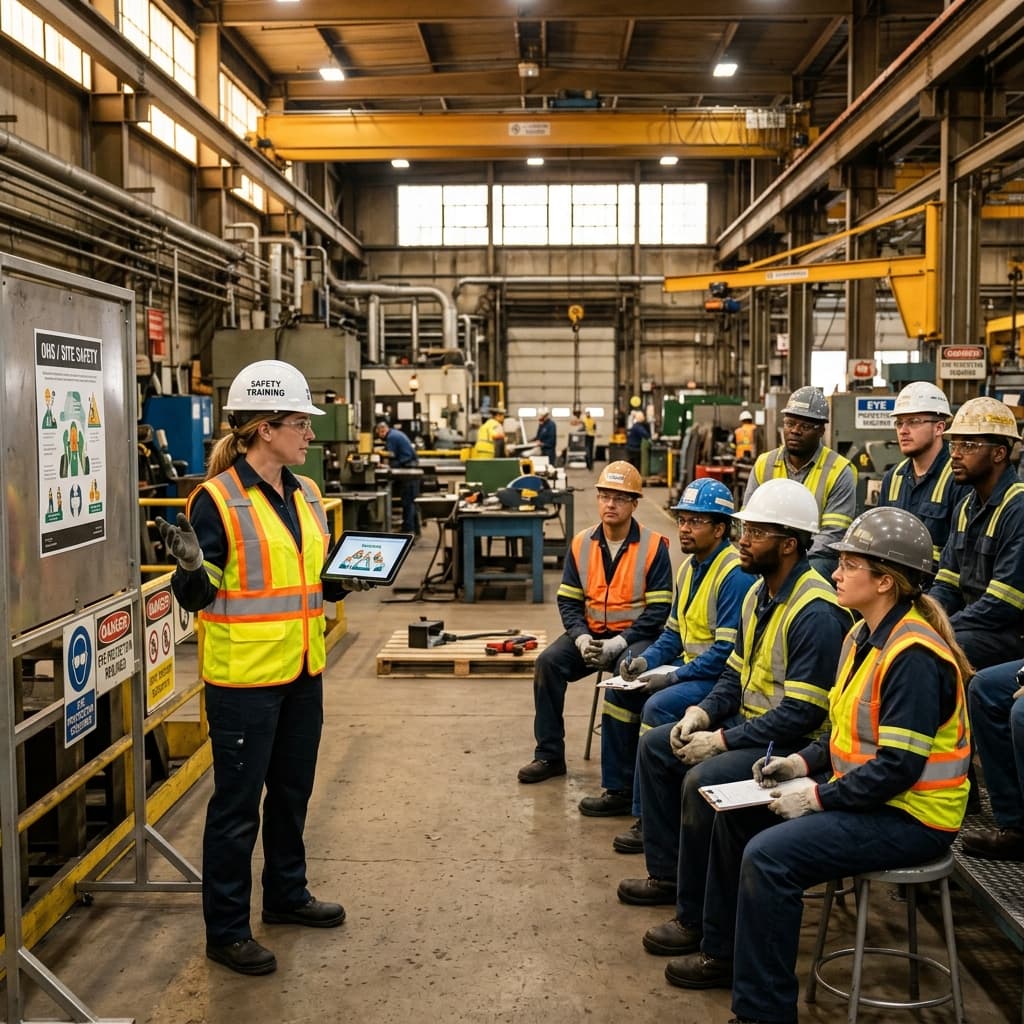
Onsite Forklift Training Session
Your Safety. Our Mission.
BHG Forklift Training trains and evaluates forklift operators at your facility, on your own trucks. Our instructors bring decades of hands-on experience in warehouses, distribution centers, manufacturing plants and construction sites.
Our approach is simple: we listen first. Every facility has its own trucks, layout and traffic patterns. We build each session around your equipment, your aisles and docks, and your shifts — so your operators train for the work they actually do.
From Class 1 electric riders in the warehouse to Class 7 rough terrain forklifts on the job site, we cover every OSHA truck class, from our base in Hannibal, Missouri to employers across 17 states in the Midwest and South, in English or Spanish.
Get in Contact with us Here!
Fill out the form below and we'll be in touch within one business day.