Forklift Training & Certification in New Orleans, Louisiana
In New Orleans, forklifts work the riverfront: container freight off Napoleon Avenue, steel and rubber on the breakbulk wharves, and frozen cargo on the Inner Harbor. BHG Forklift Training comes to your facility and trains and evaluates your operators on the trucks they run every day.
- OSHA Classes 1–7
- Training at Your Facility
- Hands-On Evaluations
- Certification Records
Forklift Operator Training in New Orleans
Port NOLA lists 40 berths, 20 million square feet of cargo-handling area and more than 3.1 million square feet of covered storage. Its container business is concentrated at the Napoleon Avenue Container Terminal upriver, while breakbulk wharves spread upriver, downriver and along the Inner Harbor. The port describes its cargo as coffee, plastics, apparel and food in containers, and steel, non-ferrous metals, rubber, wood and paper as breakbulk. Most of that freight touches a forklift somewhere between the ship and the customer.
The equipment changes from one address to the next. A breakbulk shed on the uptown riverfront may need large pneumatic-tire trucks with the capacity for steel and forest products, a cold storage warehouse on the Inner Harbor runs electric trucks in and out of freezer rooms, and a container freight station strips boxes with sit-down counterbalance trucks and pallet jacks. OSHA expects each operator to be trained and evaluated on the truck they actually use, in the conditions of their own workplace.
BHG Forklift Training is a service of BHG Safety Partners LLC, a Disabled Veteran-Owned company based in Hannibal, Missouri. We travel from Hannibal to your New Orleans-area facility and cover the three parts 29 CFR 1910.178(l) requires: formal instruction, practical hands-on training, and an evaluation of each operator's performance in your workplace, on your own trucks. Your company then certifies its operators.
Where Forklifts Work in New Orleans
Breakbulk wharves along the river and Inner Harbor
Port NOLA's breakbulk terminals include Nashville Avenue, with a 1,077,600-square-foot shed and heavy-lift and project cargo, plus Milan Street, First Street, Alabo Street and France Road, several of them served by rail on the apron. Moving steel, coils, lumber and paper on open wharf aprons calls for pneumatic-tire trucks, strict respect for capacity plates and attachments, and caution at wharf edges and rail tracks.
Napoleon Avenue Container Terminal and rail transfer
The container terminal has a 48-acre marshalling yard, an 840,000 TEU annual capacity and on-dock rail at the adjacent Mississippi River Intermodal Terminal, and the Milan Street terminal doubles as a container freight station for the Napoleon operations. Stripping and stuffing containers puts forklifts on dock plates and container floors, where trailer creep, uneven floors and poor light inside the box are the hazards to train for.
Refrigerated terminals at Henry Clay Avenue and Jourdan Road
Port NOLA lists both as refrigerated cargo terminals operated by Lineage Logistics, with blast freezing to 0 degrees F, and the Jourdan Road warehouse can store 55 million pounds of refrigerated cargo. Operators moving between freezers and humid docks deal with condensation, frost on floors and forks, reduced battery performance and cold exposure.
NASA's Michoud Assembly Facility
Michoud, in New Orleans East, has 43 acres of manufacturing space under one roof and builds the core stage for NASA's Space Launch System. Large manufacturing floors like this depend on forklifts and tow tractors to move parts and tooling among overhead cranes, work platforms and pedestrians.
What Shapes Forklift Safety in New Orleans
Louisiana is under federal OSHA jurisdiction, so 29 CFR 1910.178 applies directly to forklifts in New Orleans warehouses and plants. At marine terminals the truck requirements come from the marine terminal standard, 29 CFR 1917.43, but 29 CFR 1917.1 applies the general industry operator training rule, 1910.178(l), to marine terminals as well. Stevedores and terminal operators need both in view.
The Atlantic hurricane season runs from June 1 to November 30, and the National Hurricane Center puts its peak on September 10. Storm preparation and recovery bring a rush of pallet moves, generator and supply staging, and operators working on debris-strewn or water-damaged floors, so refresher training and truck inspections belong in the plan before the season.
NWS New Orleans lists a 1991 to 2020 normal of 85.2 days a year at or above 90 degrees at Louis Armstrong New Orleans International Airport, and 2025 had 127. Normal annual rainfall there is 63.35 inches. Operators on open wharves and in trailers need water, rest and acclimatization, and wet dock approaches cut traction.
Forklift Classes New Orleans Employers Need Most
All forklift classes- Class I: Electric Rider Forklift TrainingDesigned for electric rider forklifts used in warehouses and distribution centers.
- Class III: Electric Pallet Jack & Walkie TrainingCertification for electric pallet jacks and walk behind lift equipment.
- Class V: Outdoor Pneumatic Tire Forklift TrainingCertification for outdoor forklifts with pneumatic tires and engines.
- Class VI: Tow Tractor & Pulling System TrainingTraining for tow tractors and powered pulling equipment systems.
New Orleans Forklift Training Questions
We get a lot of the same great questions from new clients. Here are the answers to the ones we hear most often — if yours isn't listed, don't hesitate to reach out directly.
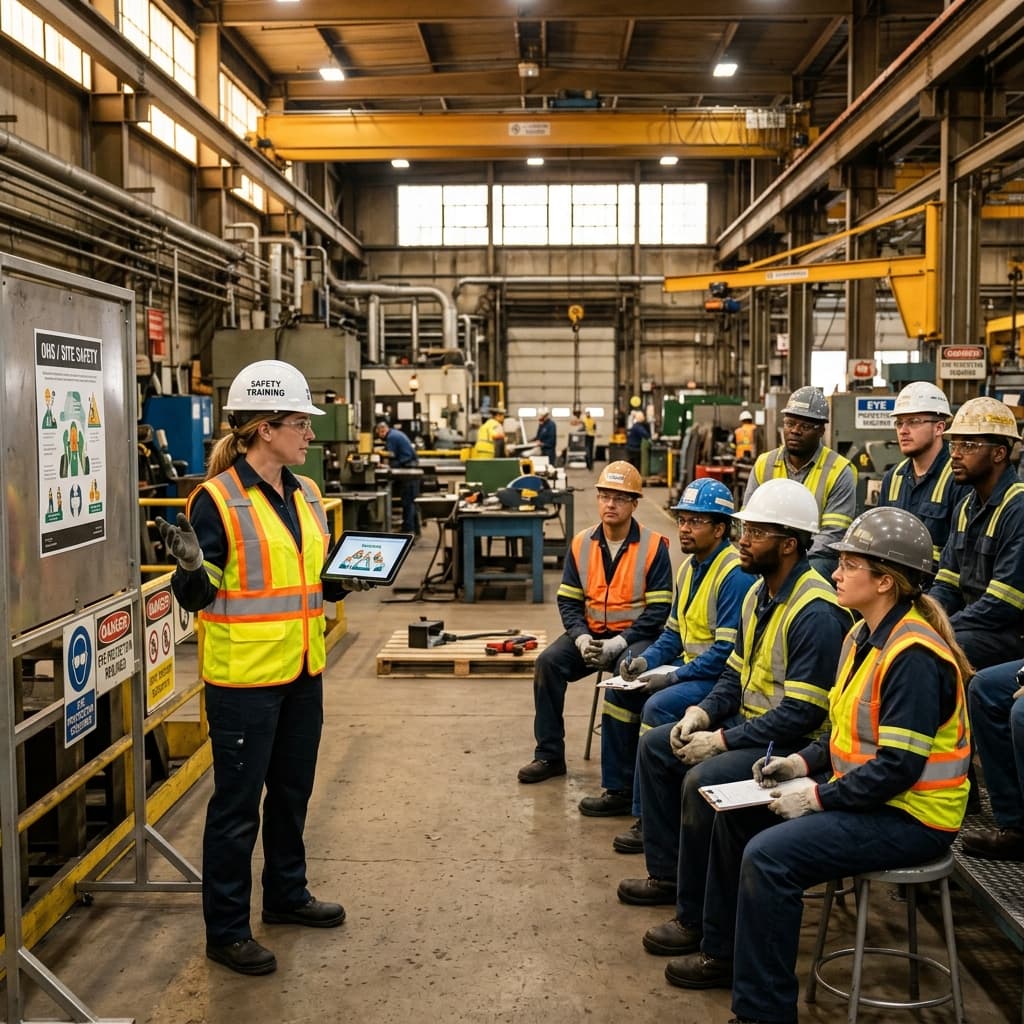
Onsite Forklift Training Session
Your Safety. Our Mission.
BHG Forklift Training trains and evaluates forklift operators at your facility, on your own trucks. Our instructors bring decades of hands-on experience in warehouses, distribution centers, manufacturing plants and construction sites.
Our approach is simple: we listen first. Every facility has its own trucks, layout and traffic patterns. We build each session around your equipment, your aisles and docks, and your shifts — so your operators train for the work they actually do.
From Class 1 electric riders in the warehouse to Class 7 rough terrain forklifts on the job site, we cover every OSHA truck class, from our base in Hannibal, Missouri to employers across 17 states in the Midwest and South, in English or Spanish.
Get in Contact with us Here!
Fill out the form below and we'll be in touch within one business day.