Forklift Training & Certification in Mobile, Alabama
In Mobile, Alabama, forklifts handle steel coils and slabs, paper rolls and lumber on the Port of Mobile's general cargo docks, strip containers from the APM Terminals yard, and move parts around the Airbus assembly lines at Brookley. BHG Forklift Training comes to your Mobile facility and trains and evaluates your operators on your own trucks.
- OSHA Classes 1–7
- Training at Your Facility
- Hands-On Evaluations
- Certification Records
Forklift Operator Training in Mobile
The Alabama Port Authority runs the deepwater Port of Mobile, and its facilities pages read like a list of forklift loads: steel slabs, coils, plate, pig iron and aluminum ingots; lumber, wood pulp and paper rolls; bags, boxes, barrels and oversized equipment. The port reports 2.4 million square feet of rail-served covered warehouse space plus 2.4 million square feet of open storage, and it notes clamp trucks for paper rolls among its forest products equipment. In Mobile, a forklift operator may run a large pneumatic-tire truck on an open steel yard in the morning and a clamp truck in a paper warehouse after lunch.
Waterfront work in Mobile also brings a regulatory wrinkle. Marine terminals fall under 29 CFR Part 1917, but 1917.1(a)(2)(xiv) applies the general industry operator training rule, 1910.178(l), to marine terminals too. Whether your operators work a pier, a port warehouse or a plant across town, the same three pieces are required: formal instruction, hands-on practice and an evaluation of each operator in the actual workplace.
BHG Forklift Training belongs to BHG Safety Partners LLC, a Disabled Veteran-Owned company in Hannibal, Missouri. We travel to Mobile and Baldwin County sites, train in English or Spanish, and work on the trucks and attachments your people actually use. The hands-on work and evaluation happen where your operators actually drive, whether that is a steel yard on the river, a paper warehouse or a hangar at Brookley. Your company then certifies its operators.
Where Forklifts Work in Mobile
Port of Mobile steel and metals terminals
The port calls itself one of the largest steel handling ports in the U.S., with an import slab terminal on a 50-foot channel and a coil facility on 40 feet of water, including the Alabama Steel Terminal and Pinto Island Marine Terminal. Coils and slabs demand trucks and attachments rated for the load, blocking so round loads cannot roll, and care around rail-mounted cranes and barge staging.
General cargo and forest products warehouses
The Port of Mobile lists 18 general cargo piers with a 40-foot draft, more than 55 acres of laydown space, and 218 acres across its general cargo facilities, handling lumber, wood pulp, paper rolls and other forest products. Clamp trucks and other attachments change a truck's rated capacity, and damaged paper rolls or leaning lumber stacks can shift or fall, so training should cover both.
APM Terminals container terminal and rail transfer
The container terminal, operated by APM Terminals since 2008, covers 149 acres with a 2,400-foot berth and 325 reefer plugs, handles over 500,000 TEUs a year, and has an on-dock intermodal container transfer facility. Warehouses stripping those boxes run forklifts onto dock plates and container floors, where trailer creep, uneven floors and poor light are the hazards to drill.
Airbus final assembly lines at the Mobile Aeroplex at Brookley
Airbus builds A320 Family and A220 aircraft at Brookley and, with its second A320 line inaugurated in October 2025, employs more than 2,000 people across 2.5 million square feet, including logistics areas and a new distribution center. Parts and tooling moving by forklift and tow tractor inside hangars must be handled around high-value aircraft structures, work stands and heavy pedestrian traffic.
What Shapes Forklift Safety in Mobile
Alabama is under federal OSHA jurisdiction. Plants and warehouses in Mobile follow 29 CFR 1910.178 directly, while marine terminal employers follow Part 1917, which also brings in the 1910.178(l) operator training requirements through 1917.1(a)(2)(xiv). A stevedore or terminal operator should document training against both.
The Atlantic hurricane season runs June 1 to November 30, with a peak on September 10, according to the National Hurricane Center. NWS Mobile reports that Hurricane Sally came ashore at Gulf Shores on September 16, 2020 as a Category 2 storm with 105 mph winds, and an 82 mph gust was recorded at Mobile Regional Airport. Storm prep and cleanup change floors, travel paths and sometimes which truck a person drives, which can trigger refresher training.
NOAA's 1991-2020 normals for Mobile average 77.5 days a year at or above 90 degrees F and 67.08 inches of rain a year. Operators on open docks and in trailers need water and rest breaks, and wet dock approaches and ramps cut traction and stopping distance.
Forklift Classes Mobile Employers Need Most
All forklift classes- Class I: Electric Rider Forklift TrainingDesigned for electric rider forklifts used in warehouses and distribution centers.
- Class V: Outdoor Pneumatic Tire Forklift TrainingCertification for outdoor forklifts with pneumatic tires and engines.
- Class VI: Tow Tractor & Pulling System TrainingTraining for tow tractors and powered pulling equipment systems.
Mobile Forklift Training Questions
We get a lot of the same great questions from new clients. Here are the answers to the ones we hear most often — if yours isn't listed, don't hesitate to reach out directly.
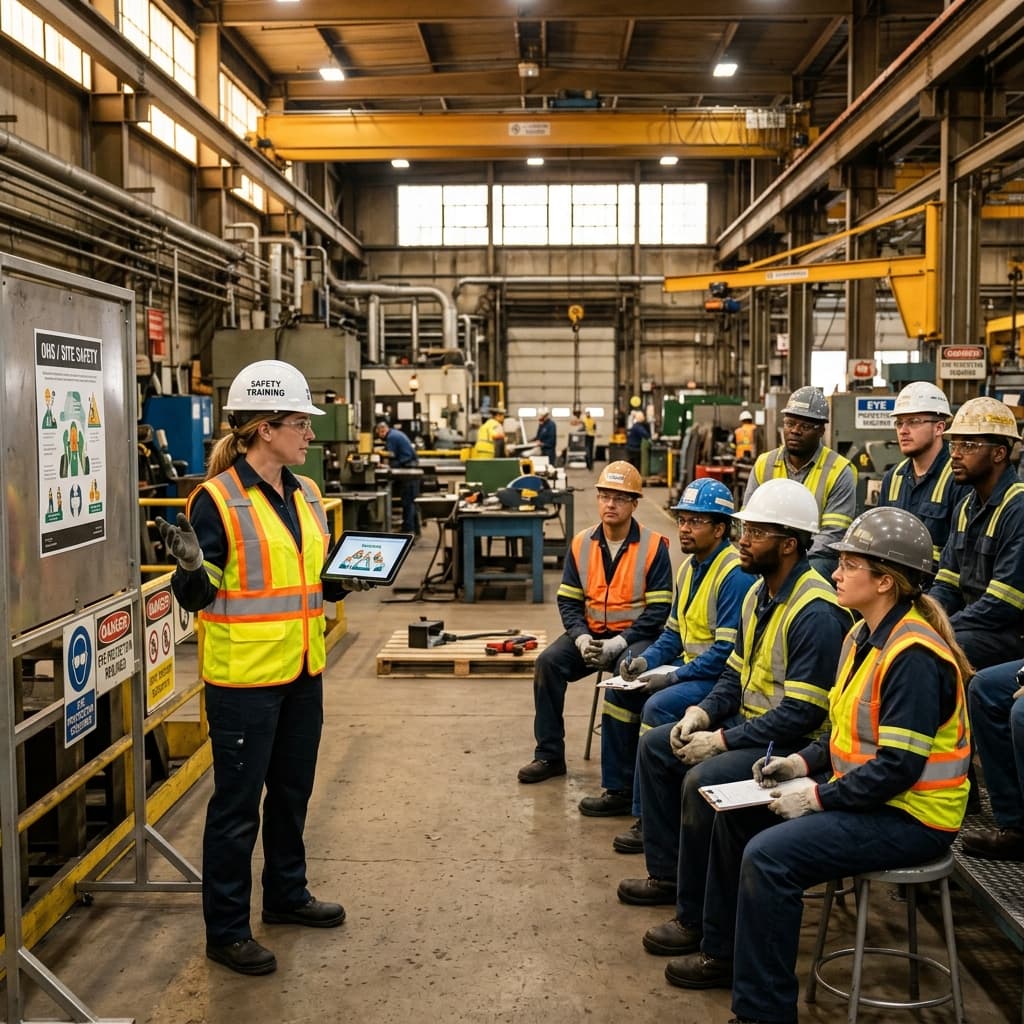
Onsite Forklift Training Session
Your Safety. Our Mission.
BHG Forklift Training trains and evaluates forklift operators at your facility, on your own trucks. Our instructors bring decades of hands-on experience in warehouses, distribution centers, manufacturing plants and construction sites.
Our approach is simple: we listen first. Every facility has its own trucks, layout and traffic patterns. We build each session around your equipment, your aisles and docks, and your shifts — so your operators train for the work they actually do.
From Class 1 electric riders in the warehouse to Class 7 rough terrain forklifts on the job site, we cover every OSHA truck class, from our base in Hannibal, Missouri to employers across 17 states in the Midwest and South, in English or Spanish.
Get in Contact with us Here!
Fill out the form below and we'll be in touch within one business day.